

📘 Crypto Guides & How-To Course
Step 15 of 16
In this step, you’ll learn what slippage really is, why it happens, and how it quietly costs beginners money — even when they think they made the “right” trade.
This lesson will help you avoid panic, bad fills, and confusing losses.
❓ What Is Slippage in Crypto?
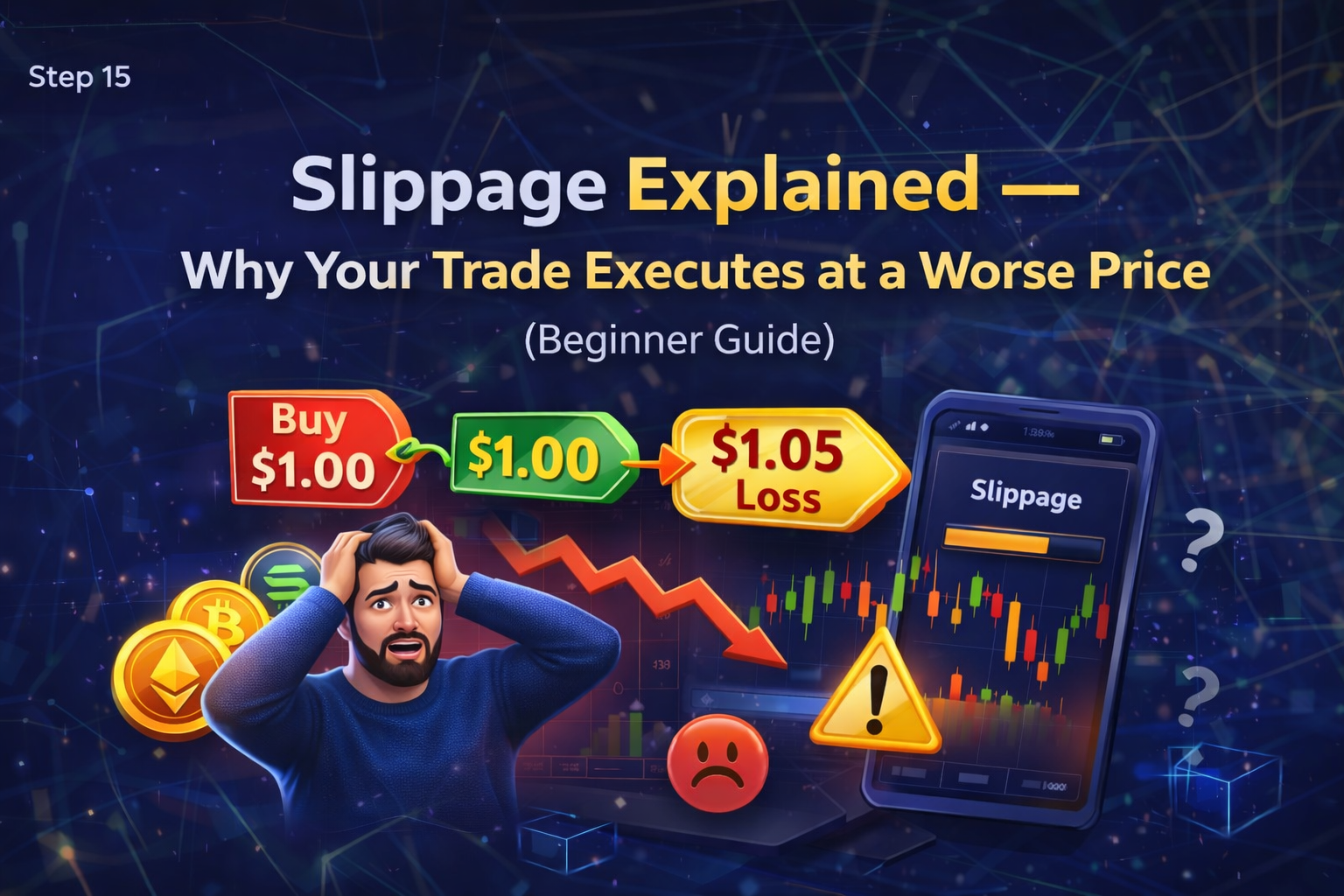
Slippage happens when your buy or sell order executes at a different price than you expected.
You click:
“Buy at $1.00”
But the trade fills at:
$1.05 😬
That difference is slippage.
And no — it’s not a bug, scam, or exchange trick.
🔍 Why Slippage Happens
Slippage occurs because markets move in real time.
Here are the most common causes:
1️⃣ Low Liquidity
If there aren’t enough buyers or sellers at your price, your order gets filled at the next available price.
👉 This is why Step 14 (Liquidity) matters so much.
2️⃣ Large Orders
Big trades can move the market.
If you try to buy or sell a large amount at once, your order may fill across multiple price levels.
Result:
- First part fills at your price
- The rest fills at worse prices
3️⃣ Market Volatility
During fast price moves (news, hype, panic), prices change between the moment you click and the moment the order fills.
Crypto never sleeps — and neither does volatility.
4️⃣ Market Orders (Big One ⚠️)
Market orders prioritize speed, not price.
That means:
“Fill this order immediately — at ANY available price.”
This is the #1 reason beginners experience slippage.
🧠 Slippage vs Price Manipulation (Important Truth)
Most beginners think:
“The exchange screwed me.”
In reality:
- Slippage is normal
- It happens in stocks, forex, and crypto
- It’s a market mechanic — not a conspiracy
Once you understand it, you can control it.
🛑 Why Slippage Hurts Beginners the Most
Slippage causes beginners to:
- Buy higher than planned
- Sell lower than expected
- Panic when trades look “wrong”
- Lose confidence
Worst part?
👉 Many don’t even realize slippage is what happened.
✅ How to Reduce or Avoid Slippage
✔️ Use Limit Orders (Instead of Market Orders)
A limit order lets you choose the exact price.
If the price isn’t available:
- The trade doesn’t execute
- No surprise fills
This is one of the most important beginner skills.
✔️ Avoid Low-Liquidity Coins
Tiny coins = bigger slippage risk.
Stick to:
- High volume
- Well-known assets
- Active trading pairs
✔️ Trade During Active Hours
Slippage is worse when fewer people are trading.
More activity = tighter prices.
✔️ Break Large Trades Into Smaller Ones
Instead of one big order:
- Split it into smaller trades
- Reduce price impact
🔗 How Slippage Connects to Earlier Steps
- Liquidity (Step 14) → Low liquidity causes slippage
- Market Cap vs Price (Step 11) → Cheap coins often have bad slippage
- FDV (Step 13) → Token unlocks can spike slippage
Crypto concepts don’t live alone — they stack.
🧩 Simple Real-World Example
Think of slippage like buying gas:
- You see $3.50 on the sign
- You pull in late during a rush
- Only premium is left at $3.85
Same station. Same gas.
Different price due to demand.
✅ Key Takeaways
✔ Slippage is normal
✔ Market orders cause most slippage
✔ Low liquidity = higher risk
✔ Limit orders protect beginners
✔ Understanding slippage = fewer “mystery losses”
➡️ Next: Step 16 – Market Orders VS Limit Orders
➡️ Next: Step 17 — Putting It All Together (How Beginners Actually Avoid Losing Money)
This final step connects everything you’ve learned into one simple framework.
You’re almost there 🚀