

📘 Crypto Basics Course
Step 4 of 9
In this step, you’ll learn the difference between hot wallets and cold wallets — and how to choose the right one based on security vs convenience.
⬅️ Previous: Step 3 – What Is a Crypto Wallet
➡️ Next: Step 5 – Exchanges vs Wallets
🔥❄️ What You’ll Learn in This Step
- What hot wallets are (and when they make sense)
- What cold wallets are (and why they’re more secure)
- Which type beginners usually start with
- How long-term holders protect their crypto
If you’re new to crypto, one of the most important questions you’ll hear is:
“Where should I store my crypto?”
That’s where hot wallets and cold wallets come in.
Understanding the difference between these two wallet types is critical for security, safety, and peace of mind. Let’s break it down in simple English.
Quick Summary (TL;DR)
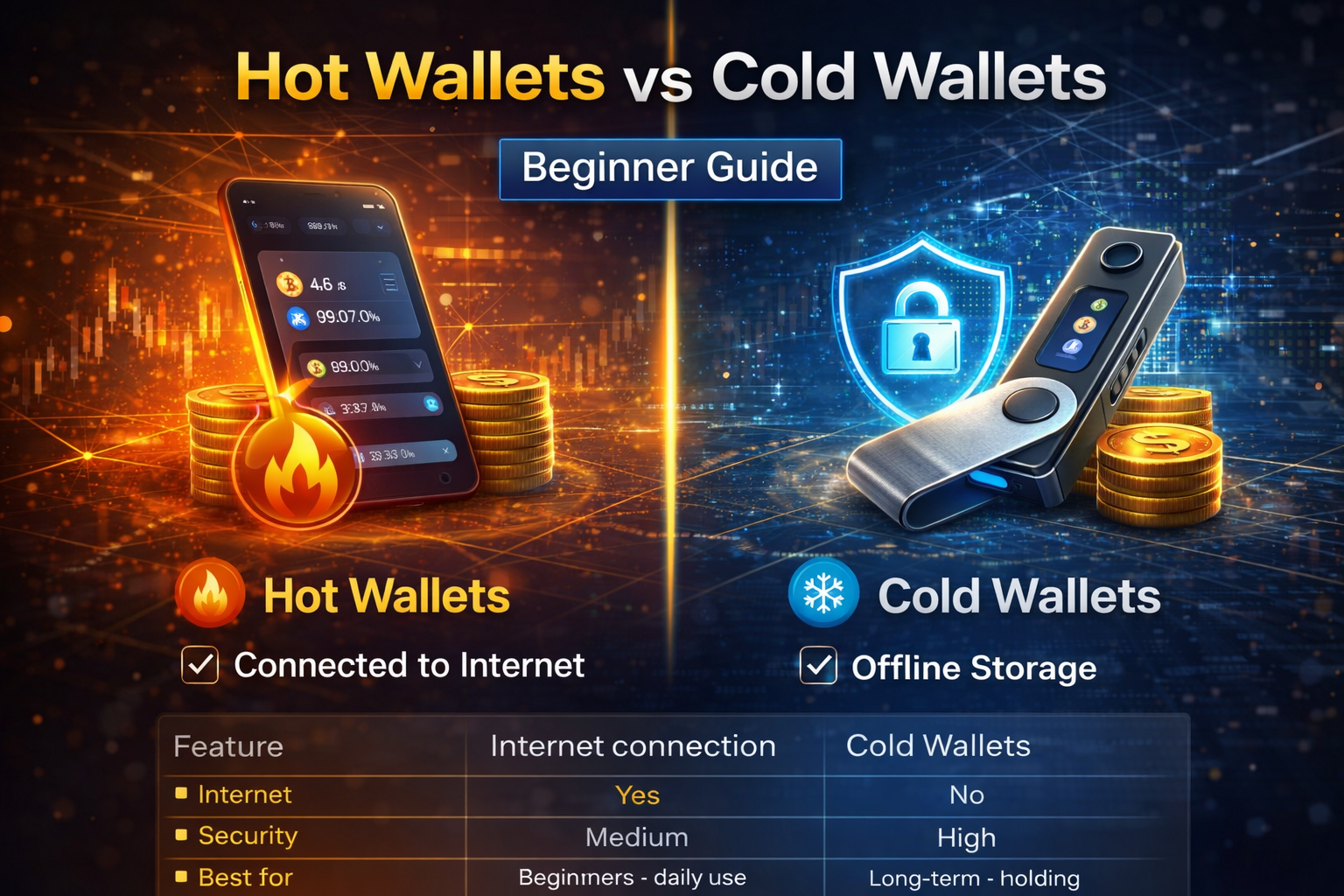
- Hot Wallets → Connected to the internet (easy, fast, convenient)
- Cold Wallets → Offline storage (more secure, long-term storage)
- Beginners usually start with hot wallets
- Long-term holders often move funds to cold wallets
Now let’s go deeper 👇
What Is a Hot Wallet?
A hot wallet is a crypto wallet that is connected to the internet.
Common Examples:
- Mobile apps
- Desktop wallets
- Web wallets on exchanges
Why People Use Hot Wallets:
- Easy to set up
- Quick access to funds
- Great for learning and small amounts
- Ideal for daily use and transactions
Downsides:
- Because they’re online, they’re more vulnerable to hacks
- Not ideal for storing large amounts long-term
👉 Think of a hot wallet like cash in your pocket.
Convenient — but you wouldn’t carry your life savings in it.
What Is a Cold Wallet?
A cold wallet stores your crypto offline, completely disconnected from the internet.
Common Examples:
- Hardware wallets (USB-style devices)
- Paper wallets (private keys written down)
Why People Use Cold Wallets:
- Extremely secure
- Safe from online hacks
- Best for long-term holding (“HODLing”)
- You control your private keys fully
Downsides:
- Less convenient for daily use
- Costs money (for hardware wallets)
- Requires responsibility (losing it = losing access)
👉 Think of a cold wallet like a safe or vault.
Secure — but not something you open every day.
Hot Wallet vs Cold Wallet (Simple Comparison)
| Feature | Hot Wallet | Cold Wallet |
|---|---|---|
| Internet connection | Yes | No |
| Security level | Medium | High |
| Ease of use | Very easy | Moderate |
| Best for | Beginners, daily use | Long-term storage |
| Risk of hacking | Higher | Extremely low |
Which One Should Beginners Use?
Most beginners should start with a hot wallet, especially when:
- Learning how crypto works
- Using small amounts
- Making frequent transactions
As your knowledge and holdings grow, many people:
- Keep some crypto in a hot wallet
- Move long-term holdings to a cold wallet
This gives you the best of both worlds.
Important Safety Tip ⚠️
No matter which wallet you use:
- Never share your recovery phrase
- Write it down and store it safely
- Never store it online or take screenshots
- If someone has your recovery phrase → they own your crypto
What’s Next in Your Learning Path?
Now that you understand wallet types, the next step is learning:
👉 How to choose the best wallet (and which ones beginners trust)
👉 Common wallet mistakes to avoid
We’ll cover that next.