


This post was originally published on this site.
In brief
- Thai investigators have seized $8.6 million in Bitcoin mining equipment linked to “Chinese transnational scam networks” operating from Myanmar.
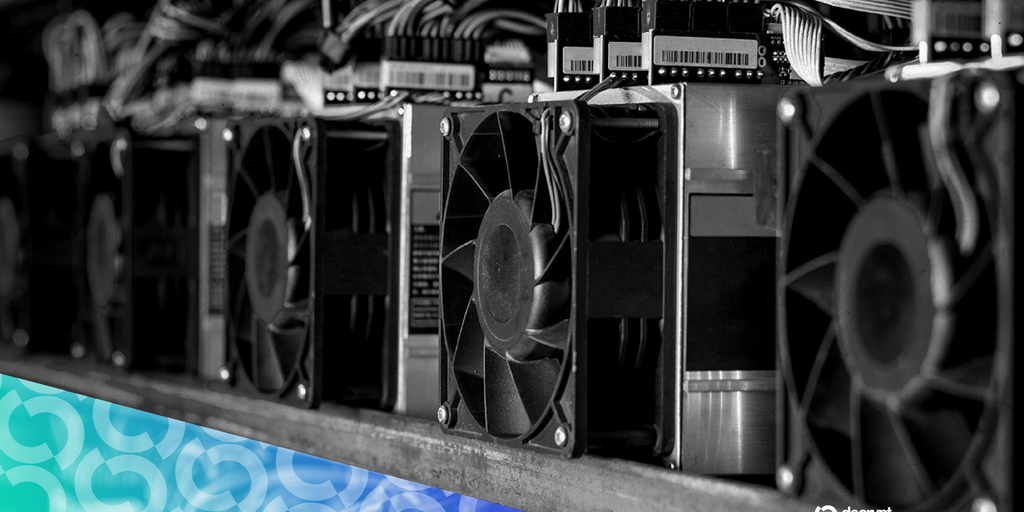
- The raid uncovered 3,642 rigs used to generate revenue and launder illicit funds through “clean” newly minted coins.
- Experts say the mines are part of a wider transnational fraud infrastructure now spreading across Southeast Asia.
Thai authorities have seized $8.6 million worth of Bitcoin mining equipment (300 million baht) from seven operations suspected of bankrolling Chinese transnational scam gangs operating from Myanmar.
The Department of Special Investigation raided six locations in Samut Sakhon province and one in Uthai Thani on Tuesday, impounding 3,642 mining devices valued at $7.7 million (270 million baht) and electrical equipment worth $860,000 (30 million baht), according to a Bangkok Post report.
The raids come amid concerns that Bitcoin mining has evolved from energy-theft nuisance into critical infrastructure for international cybercrime networks.
Thai Investigators discovered most devices were installed in soundproofed containers with water-cooling systems, as per the report.
They traced the operations to Chinese scam gangs based in Myanmar that had accumulated financial transactions exceeding $143 million (5 billion baht).
The agency has reportedly requested assistance from the Chinese government to expand its investigation.
Mining operations now serve dual purposes for criminal syndicates: converting stolen electricity into revenue while laundering illicit proceeds through seemingly legitimate digital assets.
David Sehyeon Baek, a cybercrime consultant, cautioned that the “Chinese scam gangs” label oversimplifies the threat.
“What we’re really looking at is a transnational franchise model—capital may originate from Chinese networks, but operations span Myanmar, Cambodia, Laos, Thailand, and beyond,” he told Decrypt.
“The same networks responsible for forced-labor scam compounds are now investing in physical infrastructure—data centers, compounds, crypto mines—because it makes the whole operation more resilient,” he noted.
Baek said how syndicates “push dirty money into rigs,” and because the farms sit behind shell firms and nominee directors, investigators often struggle to tell which coins are legitimate and which are funded by scams.
Regional crisis
The Thai crackdown follows mounting pressure across Southeast Asia to combat crypto-linked power theft.
Malaysia’s state electric utility provider, Tenaga Nasional Berhad, recently reported that illegal crypto-mining operations have drained roughly $1.1 billion (RM 4.57 billion) worth of electricity over the past five years.
Bloomberg reported on Wednesday that Malaysian authorities have deployed drones with thermal imaging and handheld sensors to hunt illegal operations, with miners installing heat shields and CCTV cameras to evade detection.
Earlier in May, authorities reported a 300% rise in crypto-linked power theft cases with Malaysian police conducting raids, seizing 45 machines worth $52,145 (RM225,000) that cost the state utility $8,342 (RM36,000) monthly in stolen electricity.
In April, the United Nations Office on Drugs and Crime warned that transnational criminal groups from East and Southeast Asia are using illegal crypto mining as a “powerful tool” to launder billions in illicit proceeds, while just last month, Interpol elevated scam-compound networks to a transnational criminal threat.
Global enforcement
Last month, U.S. Attorney for D.C. Jeanine Pirro announced the Scam Center Strike Force, an interagency initiative specifically targeting crypto scams perpetrated by organized Chinese crime syndicates.
“We shouldn’t expect these mines to disappear, just relocate,” Baek cautioned.
“As enforcement increases, rigs will move to more remote areas or across borders, exactly the way scam compounds migrated, and the real test will be whether asset seizures start hurting the business model, not just the machinery,” the expert noted.
Daily Debrief Newsletter
Start every day with the top news stories right now, plus original features, a podcast, videos and more.