

📘 Crypto Basics Course
Step 3 of 9
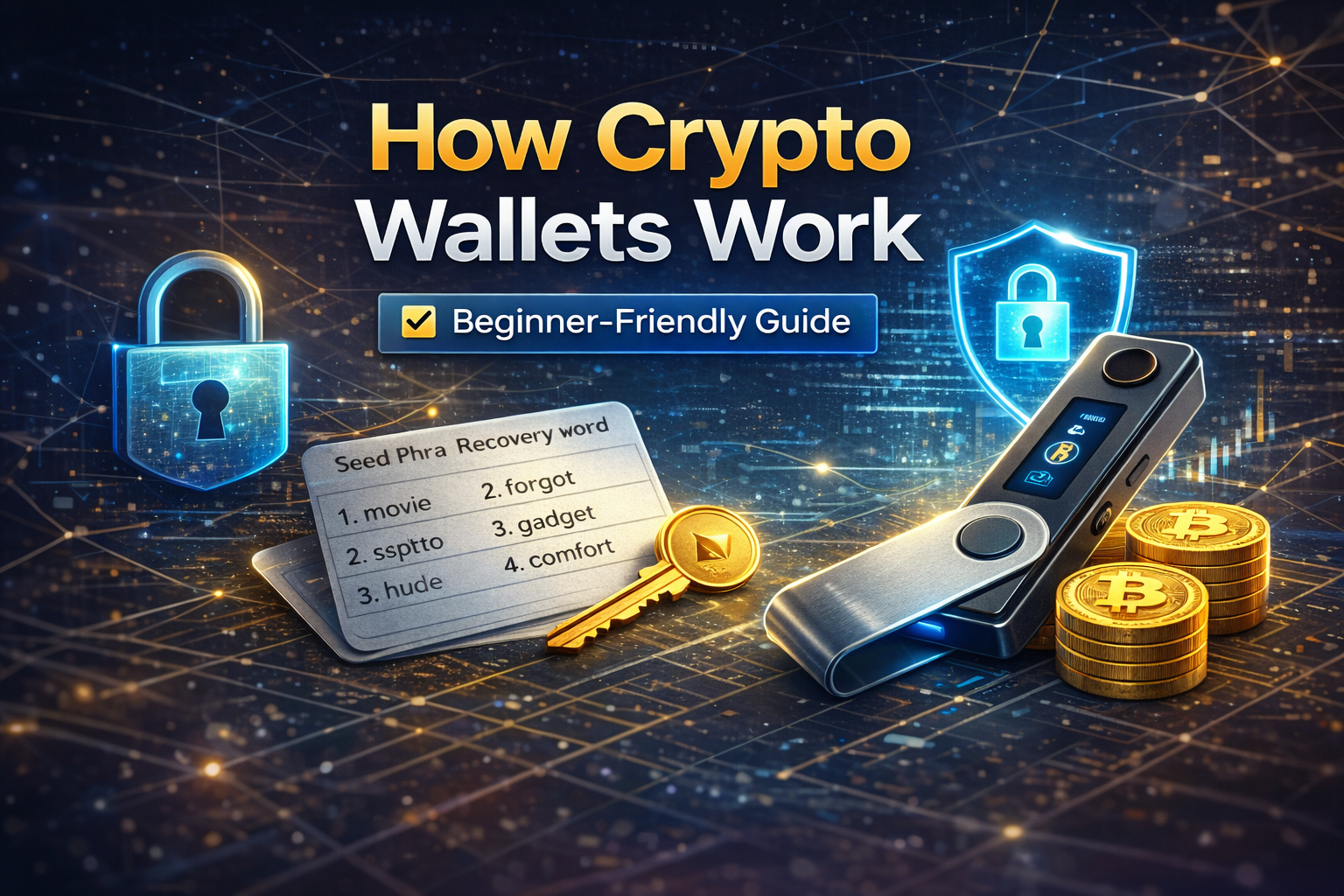
In this step, you’ll learn what a crypto wallet actually is, where your crypto really lives, and why wallets are about keys — not coins.
⬅️ Previous: Step 2 – Bitcoin vs Ethereum
➡️ Next: Step 4 – Hot Wallets vs Cold Wallets
🔐 What You’ll Learn in This Step
- What a crypto wallet really does
- Why wallets don’t “store” coins
- The difference between public keys and private keys
- Why controlling your keys means controlling your crypto
A crypto wallet is a tool that lets you:
- Store your crypto securely
- Send and receive crypto
- Prove ownership of your crypto
⚠️ Important:
Crypto wallets do NOT store your coins physically.
They store the keys that give you access to your crypto on the blockchain.
Think of it like this:
Your crypto lives on the blockchain.
Your wallet is the key that unlocks it.
Public Key vs Private Key (Simple Explanation)
Every wallet has two keys:
🔓 Public Key (Your Address)
- Safe to share
- Used to receive crypto
- Like your email address
🔐 Private Key (Your Secret)
- NEVER share this
- Gives full control over your funds
- Like your bank password + PIN combined
If someone gets your private key → they own your crypto.
Types of Crypto Wallets
There are two main types beginners need to know.
🟢 Hot Wallets (Online Wallets)
Connected to the internet
Examples:
- Coinbase Wallet
- MetaMask
- Trust Wallet
Pros:
- Easy to use
- Fast access
- Great for beginners
Cons:
- More exposed to hacks
- Best for smaller amounts
👉 Best for learning and everyday use.
🔵 Cold Wallets (Offline Wallets)
Not connected to the internet
Examples:
- Ledger
- Trezor
Pros:
- Highest security
- Great for long-term storage
Cons:
- Costs money
- Slight learning curve
👉 Best for holding larger amounts long-term.
Do Exchanges Count as Wallets?
Short answer: not really.
When crypto is on an exchange (like Coinbase or Binance):
- ❌ You don’t control the private keys
- ❌ The exchange technically owns the crypto
That’s why people say:
“Not your keys, not your crypto.”
Exchanges are fine for buying and trading —
but wallets are for ownership and security.
Which Wallet Should Beginners Use?
Here’s the simple beginner rule:
- Just starting out → Hot wallet
- Holding serious money → Cold wallet
- Trading daily → Exchange + wallet combo
There’s no “one perfect wallet.”
The best wallet is the one you understand and control.
Common Beginner Wallet Mistakes
Avoid these at all costs:
❌ Taking screenshots of seed phrases
❌ Saving private keys in email or cloud storage
❌ Clicking wallet links from DMs or emails
❌ Sending crypto without testing a small amount first
Security > speed. Always.
Final Takeaway
Crypto wallets aren’t scary — they’re empowering.
Once you understand wallets:
- You control your money
- You remove middlemen
- You take real ownership
This is one of the most important steps in crypto.