


This post was originally published on this site.
Today in crypto, Strategy will leave its August dividend on the STRC preferred shares at 12% despite the stock trading well below par. Trump Media & Technology Group extended a series of recent Bitcoin sales by moving 2,628 BTC to Crypto.com and Galaxy Research reported that losses from the Coldcard wallet incident reached 1,367 BTC ($88.6 million).
Strategy leaves preferred STRC dividend at 12% as price still below par
While Strategy’s preferred STRC shares ended July well below their $100 par value, investors were told that their August dividend will not increase, holding at 12%.
Executive chairman Michael Saylor delivered the news in a tweet on Saturday, continuing to pitch STRC as a way to “stretch your income.” August will be the second month that the dividend will be paid semi-monthly after shareholders approved that change in June.
STRC shares closed at $89.46 on Friday, clocking a 5.42% price increase for the month which began with a dividend hike — 50 basis points to 12% — after a poor stock performance in June. The volume on the Nasdaq-traded shares on Friday were about two-thirds of their daily average.
Saylor, however, did take to social media on Sunday to dangle the possibility that the company will be making an announcement of a change in its Bitcoin treasury holdings. “Bitcoin Drive engaged,” read his X post, following a familiar pattern of posting a chart of Strategy’s BTC buys from Saylortracker.com to start off the week.
Trump Media sells another 2,628 BTC, holdings fall to 4,261 BTC
Trump Media & Technology Group, the company behind Truth Social, sold another 2,628 Bitcoin worth about $165 million through transfers to Crypto.com.
Blockchain analytics platform Lookonchain said Trump Media bought 11,542 BTC at an average price of $118,522 before beginning to sell portions of its holdings seven months ago.
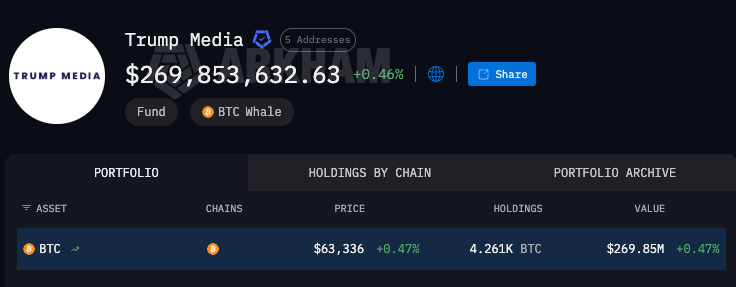
Source: Arkham
The latest transfers bring Trump Media’s total reported Bitcoin sales over the past seven months to 7,281 BTC, worth about $545 million, according to Lookonchain’s analysis, which calculated an average selling price of $74,855 per BTC. According to Arkham, the company’s remaining Bitcoin holdings stood at 4,261 BTC at publishing time, worth $269.8 million.
The transactions came amid Trump Media launching its new paid data service “Truth API,” providing faster access to Truth Social posts from President Trump. The service reportedly costs as much as $100,000 per month, giving companies a “direct, licensed, real-time feed of the platform’s most market-moving Truths.”
Coldcard Bitcoin loss estimate rises to $88.6 million after Galaxy analysis
Galaxy Research, the research arm of crypto investment company Galaxy Digital, identified 4,585 addresses linked to the Coldcard wallet incident that lost 1,367 BTC ($88.6 million).
The Coldcard incident reportedly involved a seed generation bug that affected certain wallets by reducing the randomness used to create recovery phrases. This weakened the security of certain wallets, making their private keys potentially discoverable and allowing attackers to move funds.
According to data shared by CryptoQuant head of research Julio Moreno, Bitcoin transfers below 1 BTC climbed to their highest daily level since November 2022 on Friday, with 39,600 BTC moved.
The figure was just 300 BTC below the 39,900 BTC transferred on Nov. 16, 2022, days after FTX filed for bankruptcy. “The Bitcoin plebs had not moved this amount of BTC in a day since the FTX collapse,” Moreno said, adding that he was encouraged to see users “taking action.”